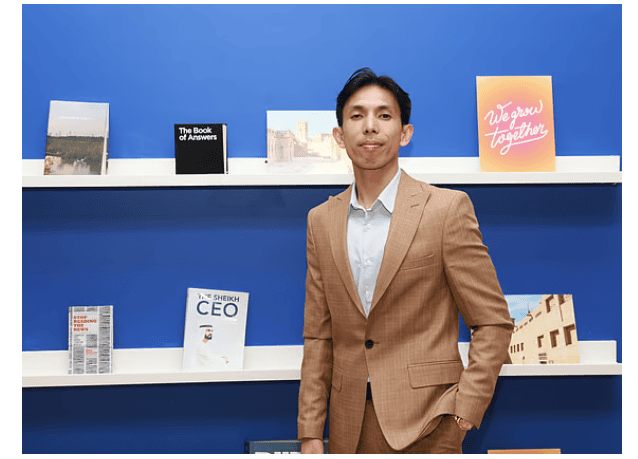
From Waiter to Business Owner: What VJ Estander’s Dubai Journey Teaches OFWs
For many Filipinos working abroad, the journey begins with a simple goal: find a better-paying job, support the family, and save enough money for the future.
For Filipino worker VJ Estander, however, his years in Dubai eventually became something more.
What started as a job as a waiter turned into years of side hustles, saving, experimenting with different products, and eventually building his own food trading company in the United Arab Emirates.
Estander arrived in Dubai in 2018. During the day, he worked as a waiter. After work, he looked for additional ways to earn money, including selling dried fish to friends and roommates.
He later tried other small businesses, including clothing, face masks, and packed meals.
Those early ventures were not large businesses, but they gave him something that would become valuable later: experience in selling, customer service, and understanding what people were willing to buy.
According to Gulf News, Estander’s entrepreneurial background started even before he left the Philippines. His family in Negros Occidental had been involved in several businesses, including restaurants, fish farms, and poultry ventures. Growing up around those businesses gave him an early look at both the opportunities and risks that come with entrepreneurship.
But his path was far from smooth.
During the pandemic, Estander lost his job and spent an entire year unemployed. Like many overseas workers during that period, he suddenly faced uncertainty about his income and future.
Instead of abandoning his plans, he continued saving, planning, and looking for opportunities.
That period became another important part of his entrepreneurial journey.
“Failure is not the opposite of success, it is part of the journey towards success,” Estander told Gulf News.
A major turning point came in 2023 when he married Molly Kae Olivera Estander. The couple shared the same goal of eventually building a business in the UAE.
Rather than immediately spending their earnings on a more comfortable lifestyle, they chose to prioritize their long-term plans.
They reduced unnecessary spending and paused travel so they could build their savings.
The capital for their business came from the money they accumulated through years of working in the UAE. According to Gulf News, the couple did not rely on outside investors or inherited wealth to launch their company.
That savings eventually helped them establish Great Harvest Foodstuff and Trading Services, a food trading business in the UAE.
For Estander, building the company was only the beginning.
He also wanted to create a product that represented his Filipino background.
That led to Krunchaa, the company’s flagship snack brand. Inspired by the popularity of banana chips and the demand for new snack products, Estander worked on the concept, flavors, and identity of the product himself.
The brand initially introduced flavors such as honey coated, nutty chocolate, and cookies & cream, later adding an ube-coated variety.
The story is significant because Estander’s business did not begin with a large investment or a ready-made company.
It started with a worker looking for ways to earn additional income after his regular job.
His first products were sold directly to people around him.
His early businesses were small.
His income was saved.
His skills developed through experience.
And over time, those small efforts became the foundation for a larger business.
For OFWs, that progression offers an important perspective.
A job overseas can provide more than a monthly salary. It can also provide an opportunity to accumulate capital, develop skills, build relationships, understand different markets, and test business ideas.
The challenge is deciding what to do with those opportunities.
Many OFWs increase their income but also increase their lifestyle. As their salary grows, so do their expenses.
Estander’s story shows another possibility: use part of that income to build something that can eventually exist beyond the job.
That does not mean every OFW needs to become an entrepreneur.
It also does not mean workers should immediately quit their jobs to start a business.
In fact, Estander’s experience suggests the opposite.
The employment provided the income that supported the side hustles and eventually helped create the capital for the business.
The side hustles provided practical experience.
The savings provided capital.
The setbacks provided lessons.
And the years of work provided the foundation.
That is perhaps the most important part of his journey.
Entrepreneurship did not happen overnight.
It developed gradually.
Estander also demonstrated the importance of understanding the market before building a larger business. His early experience selling different products allowed him to interact directly with customers and understand what people wanted.
That experience later became useful when developing his own food brand.
For an OFW thinking about starting a business, this can be a more realistic path than waiting until there is enough money to launch a large company.
Start with something small.
Sell something.
Learn from customers.
Save the profits.
Improve the product.
Then reinvest.
The business can grow as the entrepreneur grows.
Estander’s journey also highlights the value of resilience.
Losing his job during the pandemic could have ended his plans. Instead, it became another chapter in the process.
That is a reality of entrepreneurship.
There will be opportunities that don’t work.
There will be customers who say no.
There will be jobs lost, deals rejected, products that fail, and plans that need to change.
The difference often comes down to what a person does next.
For Estander, the answer was to keep working toward the bigger goal.
Today, the former waiter is no longer simply earning a salary from an employer. He is building a company and developing a Filipino-inspired consumer brand in the UAE.
His story began with a side hustle selling dried fish.
It eventually led to a food trading business and his own branded product.
For thousands of Filipinos working overseas, that journey offers a simple question worth considering:
What are you building while you’re working abroad?
The answer doesn’t have to be a million-peso business.
It could start with savings.
It could be a small online business.
It could be a product sold to fellow Filipinos.
It could be a new skill.
It could be an investment.
It could simply be learning how to sell.
The important thing is to start building something that can eventually give you more choices.
Because an OFW career does not have to end with a final paycheck.
The years spent abroad can also become the years when you build the capital, skills, relationships, and experience needed for your next chapter.
VJ Estander’s journey from waiter to business owner is a reminder that sometimes the first step toward entrepreneurship doesn’t look like entrepreneurship at all.
Sometimes it looks like going to work in the morning, finishing your shift, and then selling one more product after work.
One customer at a time.
One saving at a time.
One lesson at a time.
Until eventually, the small thing you started becomes something of your own.
For OFWs, the question may not only be how much money you can earn abroad. It may also be what you can build with the opportunity.
Source
This article is based primarily on a June 15, 2026 report by Gulf News on VJ Estander’s journey from waiter and side-hustle seller to founder of Great Harvest Foodstuff and Trading Services and creator of the Krunchaa snack brand.
Source: Gulf News — From waiter to entrepreneur: How an OFW built a Filipino snack brand in Dubai