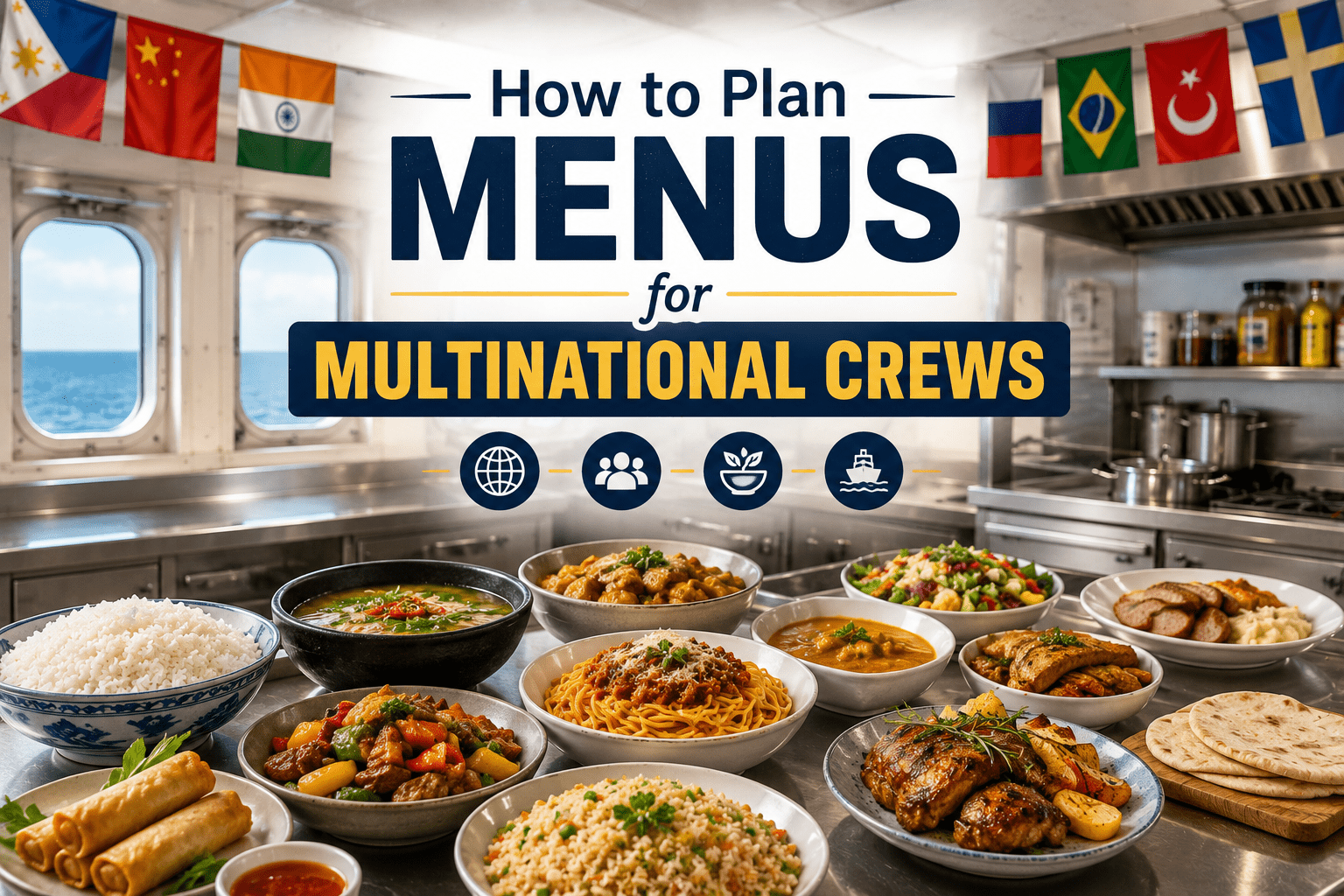
How to Plan Menus for Multinational Crews
Planning meals on a vessel isn’t as simple as deciding what to cook.
When you’re feeding a multinational crew, you’re not just preparing food—you’re managing different cultures, religions, dietary preferences, and expectations, all while working within a fixed budget and limited supplies.
As a Chief Cook, I’ve learned that a well-planned menu can improve crew morale, reduce food waste, and make life onboard much smoother.
Here are the principles I use when planning menus for multinational crews.
Understand Your Crew First
Before writing a single menu, learn who you’re cooking for.
Ask questions like:
- What nationalities are onboard?
- Are there any religious dietary restrictions?
- Who doesn’t eat pork?
- Who prefers spicy food?
- Are there vegetarians?
- Does anyone have food allergies?
Knowing your crew helps you avoid unnecessary complaints and ensures everyone has something they can enjoy.
Build a Balanced Weekly Menu
Avoid repeating the same meals every few days.
A balanced weekly rotation should include:
Breakfast
- Eggs (fried, scrambled, omelet)
- Sausages or bacon (where appropriate)
- Rice
- Bread
- Oatmeal or cereal
- Fresh fruit
Lunch
- Beef
- Chicken
- Fish
- Pork (if suitable for the crew)
- Vegetables
- Soup
- Salad
Dinner
- Lighter protein options
- Stir-fried vegetables
- Pasta
- Rice
- Seafood
- Fresh fruit or dessert
Variety keeps the crew interested in every meal.
Rotate Your Protein Sources
One common mistake is serving the same protein repeatedly.
Instead, rotate them throughout the week.
Example:
- Monday – Chicken
- Tuesday – Beef
- Wednesday – Fish
- Thursday – Lamb
- Friday – Pork
- Saturday – Seafood
- Sunday – Chef’s Special
This creates balance and prevents menu fatigue.
Respect Cultural Preferences
Multinational crews often include people from different backgrounds.
Examples include:
- Filipinos generally enjoy rice at every meal.
- Indians may prefer vegetarian dishes or stronger spices.
- Middle Eastern crew members may avoid pork.
- Europeans often enjoy bread, potatoes, salads, and grilled meats.
- Chinese crews may prefer stir-fried dishes and noodle-based meals.
You don’t have to cook separate meals for every nationality.
Instead, create menus that offer choices everyone can enjoy.
Always Offer Healthy Options
Many seafarers work physically demanding jobs.
Nutrition directly affects performance.
Include:
- Fresh vegetables
- Seasonal fruit
- Lean proteins
- Whole grains where available
- Salads several times each week
Healthy meals help reduce fatigue and improve crew well-being.
Plan Around Your Inventory
A good menu starts with your freezer and storeroom—not your imagination.
Before planning, check:
- Meat inventory
- Seafood
- Frozen vegetables
- Dry goods
- Fresh produce
- Dairy products
- Bakery supplies
Build menus around what you already have.
This minimizes waste and keeps food costs under control.
Prepare for Supply Delays
Ships don’t always receive stores on schedule.
Weather.
Port changes.
Supplier issues.
These things happen.
Always keep ingredients that can stretch your menu if deliveries are delayed.
Examples include:
- Pasta
- Rice
- Frozen vegetables
- Beans
- Lentils
- Canned goods
- Flour
- Long-life milk
Preparation prevents last-minute stress.
Control Portions Without Sacrificing Quality
Food waste is expensive.
Serving too little creates complaints.
Serving too much increases waste.
Learn your crew’s eating habits.
Track leftovers.
Adjust portions based on actual consumption rather than guessing.
Ask for Feedback
Your crew is your best source of information.
Simple questions can improve future menus.
Ask:
- Which meals did you enjoy?
- What would you like more often?
- What should we improve?
Listening builds trust and helps you create menus that satisfy the majority.
Keep a Rotating Menu Library
One of the best habits I’ve developed is keeping a collection of successful menus.
Save:
- Breakfast menus
- Lunch menus
- Dinner menus
- Special event menus
- Holiday menus
Over time, you’ll build a library that makes menu planning faster and more consistent.
Final Thoughts
Great menu planning isn’t about cooking the most expensive meals.
It’s about understanding your crew, using available ingredients wisely, maintaining variety, and delivering balanced meals every day.
A satisfied crew is often a more productive crew.
As Chief Cooks, we don’t just feed people.
We help create comfort, morale, and a sense of home—even in the middle of the ocean.
That’s the true value of good menu planning.